
In the summer of 2000, I had an opportunity to interview a life-long hero for the music zine that used to live here at clicks-and-klangs.com.
Howe Gelb is one of the most unsuccessful success stories of all time, whose influence goes way beyond his record sales. With barely a whiff of fame the desert dwelling leader of Giant Sand has nearly two decades worth of crunchy, wayward alt-country behind him, hopefully with much more to come.
Sometimes wilfully perverse, often charmingly conventional and occasionally making a false step with a failed experiment, Gelb is never complacent in his music making, and is incessantly messing with his own formulas, finding new ways to push his music into new terrain while occasionally wandering back again to familiar surroundings for old-times’ sake.
He and Butch Hancock (covered elsewhere in that issue of Clicks and Klangs) are two of a kind in that they do what they do because they need to do it, and if anyone else wants to listen then that’s just fine. Consequently those that do listen tend to listen very closely.
I first heard Giant Sand when the BBC DJ Andy Kershaw played a tune from their then-new album The Love Songs, entitled “Wearing The Robes Of Bible Black“. Within moments of the song starting I’d rushed to find a tape to record this peculiar and thrilling music on.
The introduction features a heavily de-tuned rhythm guitar that sounds like a rack of rubber bands being strummed at random, with a gloriously wobbly lead guitar twang like a more recalcitrant, more rockabilly Duane Eddy after exchanging mutually beneficial contracts with Mephistopheles.
And then the beat kicks in and we’re rattling across some very giant sands on the roof of John Steinbeck’s wayward bus, having a grand time in good company.
I had to own everything ever recorded by these people… twelve years later and I’ve almost done it.
This quest has been made more arduous by the fact that not only have few people ever properly heard Giant Sand, but Gelb’s musical output doesn’t end there. He’s also recorded and toured solo, with the likes of The Friends Of Dean Martinez, Fruit Child Large, and as The Band Of Blacky Ranchette, who produced three albums of rip-roaring country, much of which was graced with the arresting slide of the late Rainer Ptacek.
Two members of Giant Sand, John Convertino and Joey Burns also perform as Calexico, with steadily growing acclaim and success.
Every Giant Sand album is flawed in some way, but this is part of the appeal and Gelb knows it.
Only the sketchiest ideas are taken into the studio with them when they record and songs are developed there and then. Any resultant releases are a snapshot of whatever was going on while the band were locked away together.
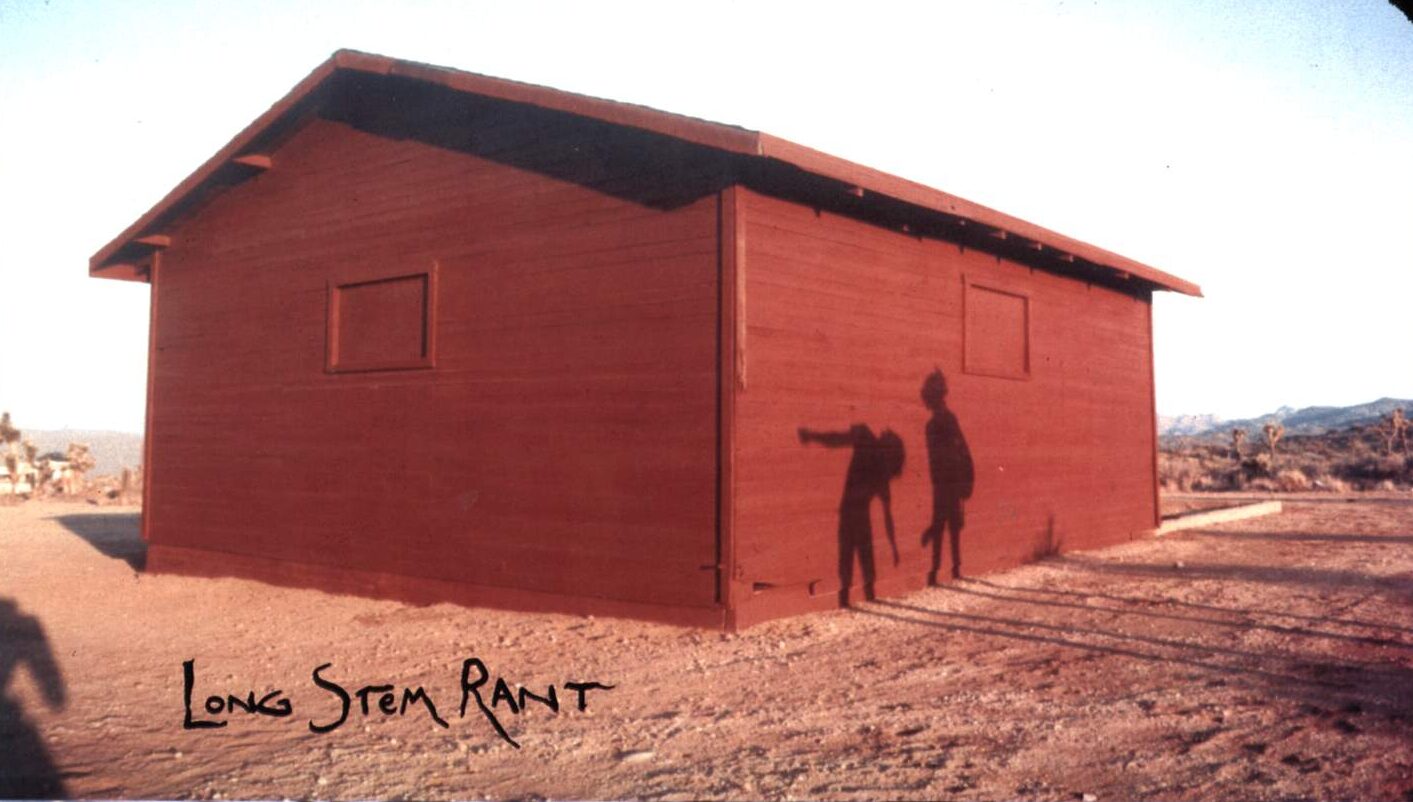
This is never more evident than on 1989’s Long Stem Rant, Giant Sand’s sloppiest album and also one of their most pleasing. Cross-grained guitar squawks drenched in distortion and feedback explode from the speakers one moment, making good their escape from Metal Machine Music, and next up there may be a foot-tappingly snappy country tune such as “Loving Cup” which sounds like it was written several generations ago by someone called Hank, Waylon or Willie.
Two years and three albums later, 1991’s Ramp is a similar melting pot, but instead of the feedback we’ve got the extraordinary vocal talents of the late Pappy Allen, the 75-year old owner of a local watering hole that Gelb happened to meet and make friends with by chance.
Pappy was so taken with Giant Sand’s music, and them with his disarmingly unaffected voice and warm personality that he joined them on a European tour singing a handful of great songs every night, introducing audience members to the deeply emotive and reassuring voice of someone old enough to be their grandfather.
Some voices make you feel warm inside and Pappy’s was like that.
Even on a song about lost love, such as “Nowhere“, his warm-hearted timbre made you feel glad to be alive, just because you knew that he was. Jud Cost was moved to write in Bucketful Of Brains:
‘You’ll be turned away at the gates of Heaven one day if they find out you haven’t heard Pappy Allen sing “Welcome To My World”.’
Just to be sure, I’m taking my copy with me.
Critics appear to be unable to know how to take Howe and his music. Albums consistently receive anything from good to rave reviews, and he is readily willing to talk about his life and music. Yet his lack of success-oriented ambition and unwillingness to play their game have made it difficult for the music press to get much of a hold on him, whether mainstream or underground. Something is happening and they don’t know what it is.
Following the release of their umpteenth-times-two album, Chore Of Enchantment, Howe Gelb answered a few questions for Clicks and Klangs:
Interview with Howe Gelb…
You’ve recently finished a four-month long tour – how did it go?
Eye-openingly well. It was a mix of Giant Sand and then me solo when Calexico would splinter off.
You have been incorporating looped samples of music and found sounds from your walkman into your live shows. You even sample randomly selected recordings of previous shows from your tour and then incorporate them into whatever is going on at the time.
When did you first start doing this and what first prompted it?
I can’t remember when I first started doing it. I think it might’ve been when I opened for Polly Harvey a couple of years ago.
I was just going to go completely wireless and old timey, and then literally at the last second, I got this idea of a set up that might work… but I wasn’t going to try it until I was at that sound check.
Needless to say it was a harrowing experience, but that brings us to the prompting of it. It’s thrilling.
Is this why you tend to take risks on stage, for the thrill? By risks I mean walking on stage without any set list or preconceived ideas about what you are going to do.
Yes. It keeps us on our toes and it seems to allow longevity.
Have you always played on the hoof in this kind of way?
No. In the very beginning I tried to actualise way too many ideas. The end result was not as healthy a ratio for satisfaction as the current, more mysterious one.
Even when you do have an idea of what you are going to do (i.e. play ‘old timey’) you then decide to bring in something completely at odds with that (i.e. the tape loops).
I think this is one of the factors which has stopped your music from appearing to play it safe, which after 20 years or so is fairly unusual for most artists.
I think the notion of success is fairly destructive. You can see elements of this surrounding any band becoming too popular. On the other hand, survival means you are doing fine.
But as for the idea that I seem to mixing up old timey elements with experimental procedures, I beg the court’s indulgence… and try to imagine why a pedal steel is considered a traditional country music instrument. I have no idea. Folk music is made by every day instruments and a walkman has become just that.
We are bombarded by the perception of reception at a rate of saturation. It seems like a good idea then, to shove some of it back and watch it spin. A walkman can do that too.
Do you mean you can play the audience back to itself, loop it, and then incorporate it into your performance?
That looping thing is all risk. The pedal I have that captures the accidental stuff that comes from the Walkman or whatever noise that is being made is from my old friend Rainer.
I inherited it from him after his death. He was a true master of that kind of capture and used two of those pedals. I tried it for awhile and still don’t know how he did it but I like using at least one of his pedals, because in a sense he is still in there somewhere.
It is a talisman. And it is so inaccurate, the rate of capture, that it adds to the gamble of it all. It has the relative allowance of roulette whereas a sampler would be too pompous in its routine.
What do you mean by pompous? Is it the precision which you don’t like; the removal of much of the risk?
Yeah. Life is not like that so why represent it that way?
How often does it backfire on you?
Well the theory is that you should be able to work with anything life throws at you. It keeps you regular.
The backfire is there about 18% of the time… down from 32%… so the odds are increasing in our favour!
I think that the turntable is now fairly commonly accepted as a ‘bona fide’ instrument, (or at least moving that way) having been experimented with as such for about 80 years, but I don’t think the Walkman is in a similar cachet, and its use in this way is relatively rare.
Do you know of anyone else today using it in this manner other than yourself and Calexico?
No, but I never thought about it.
I remember when Joey [Burns, bass in Giant Sand and various instruments in Calexico] pulled out his Walkman for the first time and I thought “Heyyyy that’s my trick..”
But that’s when you really know it’s a good thing… when others see how it can work for them.
Do you think that it is the element of risk (which you’ve already said you find appealing) that puts many others off from doing it themselves?
I can’t say. I just like doing things that not a lot of other people are doing. It frees my mind. I have relied heavily on the process of elimination over the years. The idea of chipping away the stone that doesn’t look like the sculpture you are wanting to create.
I like not thinking when I am working. I thrive on that feeling of attempting to move on total instinct and inner feelings… that to me is “soul”; soul music. Almost everyone else uses a great deal of thought processes… they are idea men.
And then you enter into that arena of competition derived from trying to out-clever anyone else… that notion is so unappealing to me. Enough people do that, so the world does not need me doing it. And some people do it very very well… but that is not my nature.
I like the non-competitive values of music, and that has become the biggest sore point with Calexico… they have established a world of competition within the original framework of this band. The good points are obvious and the popularity is increased partly due to that and the apparent change of the way people now listen to music… as opposed to 15 years ago.
But I still savour those good old days of us standing alone in the middle of nowhere… making the noises we couldn’t find at the record store.
Have those days gone?
Those old days are always gone; the past is not meant to last. Change is what this planet’s all about but the attitude remains the same and Giant Sand is all about attitude.
What sort of changes in people’s approach to music have you noticed?
I think the changes are obvious. Just imagine listening to whatever you are listening to now back 10 or 15 years ago and see how it compares with what was around then. A fun game.
If I have to go into detail about the changes in music, I would need more money to do this interview… […or even some…] I would need much more time than I have at the moment… I would need a professorship. And who needs any of that?
I had heard that the recent success of Calexico had put some strain on Giant Sand due to members of the band now having additional commitments.
Is this what you mean by competition, competing for the time and commitment of band members or is it anything more than that?
The competition is primarily for the attention we give to any project, and the competition of impending agendas. This gets ugly when you have companies involved with one of the bands and not the other and are working only for their own interest… filling up the touring schedules and recording schedules and the like.
Then there are all the side projects that Joe had taken on that also compete for time and attention.
I can hear it in his playing with Giant Sand on occasion – like his mind is not totally on what he is doing.
With John [Convertino, drums in Giant Sand and various instruments in Calexico] its different… it still feels like he’s there 100%, but Joe only allows so much of his attention span and time for Giant Sand and it shows now and then… which is aggravational.
So I have to be prepared to do something else with other players…
And still call it Giant Sand?
Probably. It was before Joe… so it will have to be after him as well. Giant Sand is a state of mind mostly. It’s the opportunity for us all to hang out together… and that has been compromised by Joe’s appetite for other involvement. I just don’t have the ambition he does.
If you listen to the record you will hear certain songs John and Joe aren’t on at all: Shiver, Wolfy, X-tra wide, No Reply (only John is on that). This is because they weren’t around when I still had to work on the record. They had only a certain amount of time slotted to record on this record and then they had to go off touring with Calexico.
What could I do? Sit around and wait for them? The record was taking way too long the way it was. Very frustrating.
It seems to me that the critical acclaim for Chore Of Enchantment has been greater than for previous albums, would you agree with this observation?
I guess so. It’s hard to really remember what excitement was attached to all those years and records. The current momentum has a habit of always seeming like the most important, but it is true that the world’s ears have changed somewhat.
There is a lot of music out there that harbours what we used to do way back when…but then it was deemed odd and experimental, and now it just seems like music.
Do you think there is anything distinctly different about your approach to this album from previous albums?
Oh yeah. This album was done completely differently from any of the other records. Usually the recordings draw from the previous tour and times the band had hung out together. This didn’t happen at all because two thirds of the band were gone for most of it with Calexico and I was also incapacitated from handling my friend’s death.
That and the three different producers, that was new too.
I was very sorry to hear about Rainer, whose playing I’d so enjoyed on the Blacky albums. Do you think Chore is your Tonight’s The Night, a recording of you trying to come to terms with the loss of a close friend?
Well… it wasn’t my choice to make that kind of record. We had just signed a deal with a larger label and they really wanted a record they could sell, and I understood that from the beginning. I thought about it for months before signing the deal. I thought that I would like to know if I had that in me to give and I didn’t mind finding out the hard way.
The thing I didn’t count on was of course my world being turned upside down by Rainer dying just weeks before we were supposed to record, and it was in the same home studio I recorded with him days before he died.
I actually wanted to make a record that sounded removed from my pain. That is the main reason it was so difficult to come up with the goods.
At the end, enough time had passed and enough heartache that I could hear clear enough to know that I had come through some deliverance of it all… but it felt like I did it so alone. That no one had the time to know what was wrong with me. No one in the band anyway. And that is what deliverance is all about, isn’t it?
Such is growing older… real life… it is something we all have to do and by that we become more aware of the unthinkable. Which, come to think of it is how I like my music… unthinkable.
How do you feel about Chore now that you can put a little distance between yourself and it? Are you pleased with the result, despite all the difficulties and hard times which were going on when you were writing and recording it?
I love the record.
I am still amazed by some of it when I pop it on the stereo after so many months of not hearing it. I’m so glad it took as long as it wanted to take. I like the excuse of the record company allowing me to keep working on it because they wanted a radio song from it.
This gave me so much more time with it… to try and figure out where I am at the moment… where we all are as a band… and what the future might hold for the band… if there even is a future.
All this was revealed, but the greatest feeling of all is the feeling of having survived all the troubles that were happening in and around the recording and really being satisfied with the result. A deliverance.
You have a solo album of piano music coming out this year. What can we expect?
It will be available from our web site and at live shows by October, along with two other solo releases… Confluence and Upside Down Home (2000). The piano one will be just that…no tether of lyrical bulge.
You have probably always been considered to be primarily a guitarist rather than a piano player, though you take a very distinctive and pleasing approach to the piano which often really makes the songs come alive.
Which instrument do you most enjoy playing, piano or guitar? It always sounds like you have the most fun with the piano.
I am more competent on the piano by choice I guess. I like the ‘not knowingness’ of guitar though, but the guitar is just more logistical for live shows. There is nothing like an acoustic piano. The electric pianos still can’t come close. It’s better not to use them usually unless the club can come up with an acoustic piano.
I wondered about some of your musical influences. I heard that you admire Thelonious Monk, and you have also come on stage a few times recently to Miles Davis’ music. Is jazz a recently found interest or has it always been there for you?
Having had no older siblings, I stumbled upon odd records mostly by their cover art…and especially what was to be had in the sale bin. That’s where I began to discover so many brilliant jazz records: mostly pianists at the time… Tommy Flannigan, McCoy Tyner, Ahmet Jammal, Oscar Peterson, Memphis Slim… but the grandest end of this chase ended when I found Thelonious Sphere Monk.
For my logic, he had a certain accountability that was not unlike what I heard in Neil Young… I even thought there was a connection between them and Clint Eastwood. I can’t explain why… or I just don’t want to…
The collection grew quite large, till they all got ripped off when I left them at a friend’s house when I was travelling. I thought the thief had good taste since he didn’t take the other stuff that was there by some other folks. It also freed me up from having to always be tethered to all that physical weight. But they had freed me further.
How do you think your own listening habits or interests have changed over the two decades that you’ve been recording and performing?
I hear things in a way that I could never hear when I was un-old. There is a soul in music that becomes more apparent with age. Tone becomes the initial inspiration on any given night. The downside of ageing is that a lot of music sounds done before, like similar chordings and melodies that seem almost cyclical. That may explain the utilisation of destructional properties to misappropriate any former similarities that may have existed in a way that would Pavlov anyone into a frenzied state of familiarity concerning “new” music.
Do you listen to a lot of music? I read somewhere that you didn’t own a record player for a while recently…
Sometimes I don’t or I have stuff that fails to operate for periods of time. There’s a wonderful refreshment when equipment breaks down. I never seem to go and buy music anymore… or hardly ever… usually when I am on the road I’m more prone to buying things to have to listen to.
But it feels better not buying anything as much as possible. It is there to take up space back at home… and without space, there is less need to fill it with something home made.
But I still get handed tapes from friends and that is mostly how I hear “new” things.
Possibly my favourite Giant Sand tunes are the ones you recorded with the late Pappy Allen. Could you tell us a bit about him?
It’s difficult to describe Pappy’s effect. He was a stellar being, proof positive that you could remain a vital fire at 75 after living a full life with all its ups and downs and raise an amazing family as well as sing better then anyone I have ever witnessed.
He was a cowboy, a builder, a diver, a biker, a singer and a grandfather. Tough as nails and tender as Santa Claus… an amazing human being. I am proud we became friends the few years before his death and it’s still hard to figure he’s not around.
How did you come to work together?
Destiny.
I moved up to a remote area of the high desert to look after an unused 4-room motel. Pappy had the only place around to hang out at… “Pappy and Harriet’s Pioneertown Palace”.
We became friends instantly… but he had that way with people; a rare grace, instead of a cynicism, which a lot of people end up having after too much time here on the planet.
Had he sung professionally before?
He travelled with his family in an elongated custom bus singing and playing with his wife and daughters in between his other day jobs before settling up in the high desert.
Did he enjoy the tour that you did together?
Very much.
It shined as an impossible light and a beautiful avenue to drive some of his songs home to. He patiently anticipated the next time we could do it again, but I became a bit gun shy since he had gotten somewhat sick on tour with a kind of unending flu bug.
He still had the best time and sang stronger then was previously considered possible, but I didn’t want him to get sick again on the road. I was waiting for a warmer set of dates – back then we would tour primarily in winter. Tragically, this never happened before his death.
But we did manage to turn him on to Tucson and he dearly loved coming down here and playing with us all. He instantly loved this town.
Howe, thank you very much for your time.
© Graham Johnston, September 2000